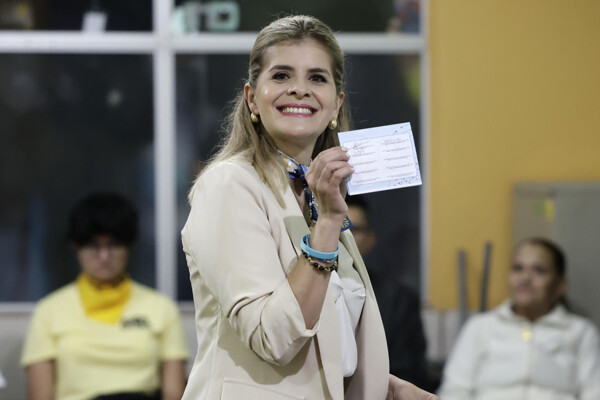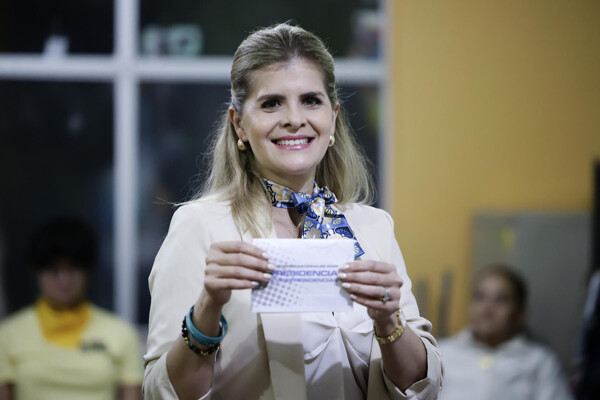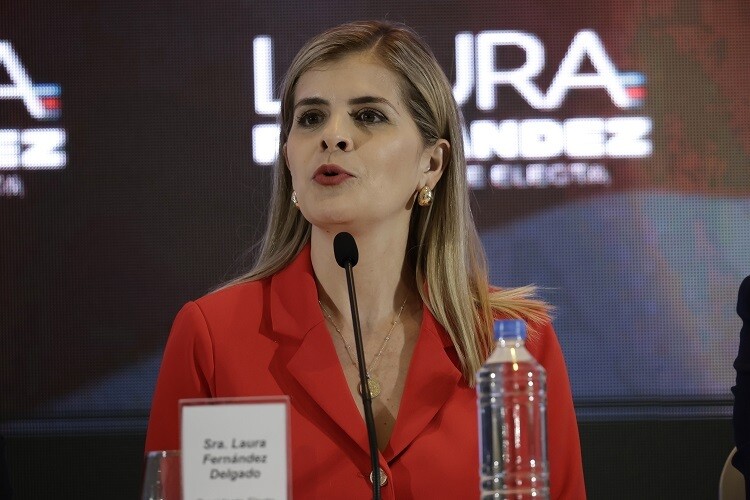
The elected president of Costa Rica, Laura Fernández, anticipates that her government, set to begin on May 8, will maintain a close relationship with the United States and El Salvador to strengthen cooperation in security and economic affairs. In her first press conference as president-elect, Fernández stated that "the recovery of security will be a priority," along with improving the penitentiary system and fighting impunity, for which she expects to count on the support of friendly nations like the U.S. and El Salvador. With the United States, Fernández said she will maintain a "close relationship, as with current president Rodrigo Chaves," especially in the fight against drug trafficking, where the U.S. government has supported Costa Rica with joint ocean surveillance, police equipment, and technical and technological cooperation. She also recalled that the United States is Costa Rica's main trading partner and a "reliable ally" in combating organized crime and drug trafficking. Regarding El Salvador, Fernández highlighted the technical and political cooperation received by Costa Rica to advance the construction of a "high-security mega-prison" for 5,000 inmates, inspired by the model implemented by Salvadoran President Nayib Bukele. Bukele visited Costa Rica on January 15 to launch, alongside President Chaves, the prison's construction, which is expected to be completed by mid-year. She added that Costa Rica can also offer cooperation to El Salvador in areas such as social development and public administration, and reiterated her admiration for that country for having "recovered its society after being mired in an unprecedented crisis." Fernández, a 39-year-old political scientist, affirmed that she will be "respectful of the sovereignty of peoples" and will promote "the strengthening of democracy in the American continent and the entire world." "I will maintain diplomatic relations in the benefit of the people of Costa Rica with all countries in the world, watching over the interest of the Ticos (Costa Ricans)," she expressed. Regarding China, she noted that a significant Chinese community lives in Costa Rica that "is part of our culture," but warned that she will embark on a "relentless fight against corruption" to prevent "illegal businesses" by "Chinese or any other country's companies." The current government of Rodrigo Chaves prohibited the participation of Chinese companies, including Huawei, in public tenders for the development of fifth-generation (5G) telecommunications networks due to concerns about the Chinese government's data security policies. This generated complaints from the company and the Chinese embassy, a country with which Costa Rica has maintained diplomatic relations since 2007.