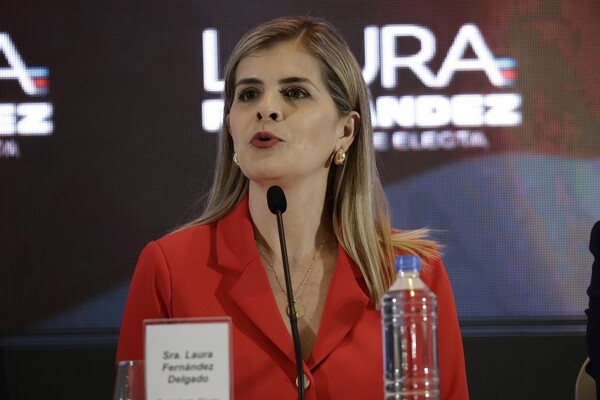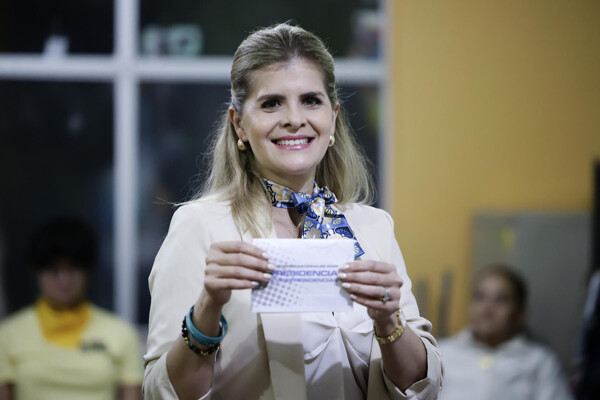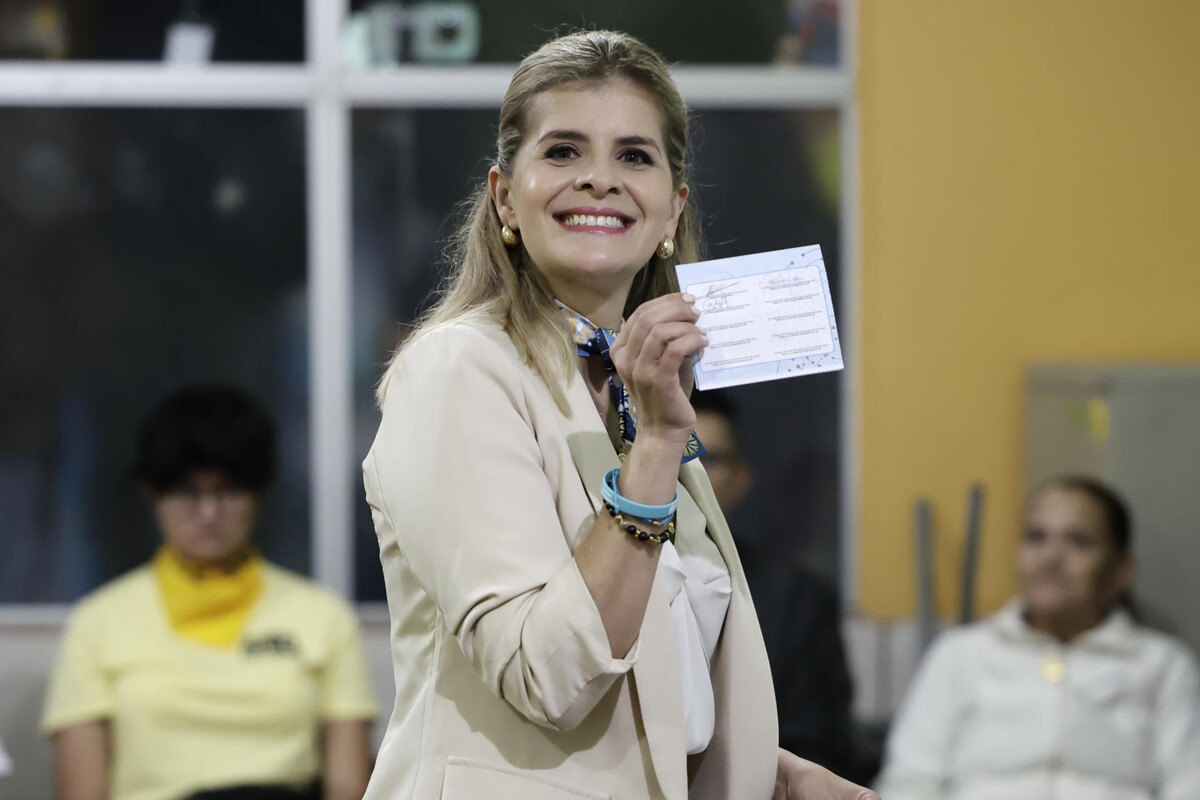
Laura Fernández, a 39-year-old right-wing political scientist, won the Costa Rican presidency in the first round this Sunday, securing a landslide victory amid citizen fears over insecurity and the advance of drug trafficking. With 69.4% of the polling stations counted, the candidate for the Sovereign People's Party reached 49.61% of the vote, comfortably surpassing the aspirant of the National Liberation Party (PLN), Álvaro Ramos, who obtained 32.5%. Fernández becomes the second woman in Costa Rican history to assume the presidency, after Laura Chinchilla (2010–2014), and does so as a figure closely linked to the current president, Rodrigo Chaves, whom she has publicly proclaimed as her “political heir.” During the campaign, shouts of “Long live Chaves!” were frequent at her public events, a clear sign of continuity with the current government. The new president was Minister of the Presidency and Planning in Chaves's administration and has followed his line of constant criticism of the Judicial and Legislative Powers, blaming them for the increase in homicides and violence linked to drug trafficking. She even left open the possibility of offering Chaves a ministerial position, whom she described as “a brilliant man.” One of the central axes of Laura Fernández's campaign was the promise of a hard line against crime, including the possibility of declaring a state of emergency in conflict zones. “I will not hesitate to make the necessary decisions to restore peace,” she stated during a debate in January. Fernández argued that the suspension of constitutional guarantees, contemplated in the Magna Carta, would allow for the removal of fully identified criminals from circulation. Another key objective for the Sovereign People's Party is to win 40 of the 57 deputies in Congress to push for judicial reforms, toughen penal laws, and avoid political gridlock. Figures in the party have confirmed that a constitutional reform to allow for consecutive presidential re-election is also being evaluated, a proposal that has generated strong criticism. These initiatives have been pointed out by opposition sectors as risks to Costa Rican democracy. Some candidates, like the leftist Ariel Robles, warned of a possible authoritarian drift. Despite this, Fernández assured after her victory: “This is a democratic celebration, and the stability of the country is something I will always take care of.” Among the projects she promised to continue are Ciudad Gobierno, the construction of a marina in the Caribbean, strategic roads, and the expansion of ports and airports.